
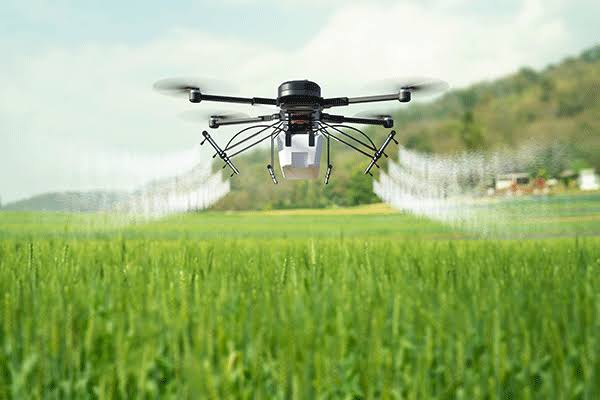
Drone spraying is becoming a practical option for sugarcane farmers, especially where labor is scarce and the crop is tall. Drones can spray pesticides, fungicides, foliar nutrients, and liquid fertilizers quickly and with more uniform coverage than manual spraying. Studies and commercial field demonstrations report that many agricultural drones can cover about 1 acre in 5–7 minutes, while reducing operator exposure to chemicals and improving spray uniformity.
Benefits for sugarcane
- Faster spraying of large fields.
- Less labor required.
- Better penetration into tall sugarcane canopies with proper settings.
- Reduced water consumption compared with conventional sprayers.
- Farmers avoid direct contact with pesticides.
- Useful even when fields are muddy after rain.
Suitable applications
- Insecticides for early shoot borer, top borer, pyrilla, etc.
- Fungicides for disease management.
- Foliar micronutrients.
- Nano urea and other approved liquid fertilizers.
- Plant growth regulators where recommended by local agricultural experts.
Typical drone specifications
- Tank capacity: 10–40 liters
- Spray width: 4–8 meters
- Flight time: 10–20 minutes per battery
- GPS-guided autonomous flight
- Obstacle avoidance on advanced models
Is buying a drone worthwhile?
If you cultivate:
- Below 20 acres: Hiring a drone spraying service is usually more economical.
- 20–100 acres: Consider purchasing if you also provide spraying services to neighboring farmers.
- Above 100 acres or an FPO/custom hiring center: Owning a drone can be a good investment. Service providers in India commonly charge on a per-acre basis, making it practical for small farmers to hire rather than purchase.